1. This Is for Everyone by Tim Berners-Lee

Tim Berners-Lee is arguably the most influential inventor in the modern world - he invented the Internet. Before artificial intelligence, the Internet was the most important invention of mankind for several decades. Interestingly, Tim was born in the same year as two other techno-stars - Bill Gates and Steve Jobs. In this book, Tim (with his trademark humor) tells how, as a young engineer, he came to CERN, the European laboratory for particle physics and soon came up with the amazing idea of adding hyperlinks to the then nascent Internet. CERN had an internal document exchange system called Enquire and it was the thing that Tim wanted to improve (for internal convenience). He first proposed specifications of URI, HTTP and HTML. As part of the project, Berners-Lee wrote the world's first web server httpd and the world's first hypertext web browser for the NeXT computer, called WorldWideWeb (later Nexus, to avoid confusion between the name of the technology ("World Wide Web") and the name of the browser). This browser worked also as a WYSIWYG editor. Berners-Lee created the world's first website at http://info.cern.ch - it appeared online on the Internet on August 6, 1991. Later Tim founded the Laboratory for Computer Science, LCS at MIT, which still develops and implements standards for the Internet.
2. My Inventions: The Autobiography of Nikola Tesla
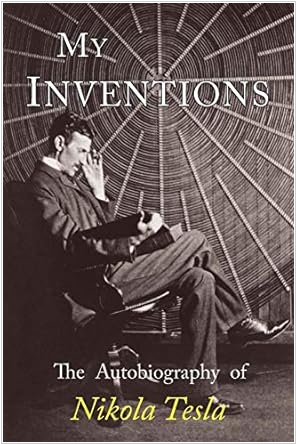
This is a rather short but must-read autobiography, because Tesla is probably the most productive inventor of all time (for now). For example, in this book he reveals his motivation - the complete dominance of consciousness over the material world and belonging to an exceptional privileged class of inventors, without which the human race would have long since disappeared in a fierce struggle with the ruthless nature. Also, in the book Tesla shares his method of invention. He says that when an inventor designs a physical device to implement an immature idea, he inevitably finds himself at the white noise of his thoughts about the details and imperfections of the mechanism. While he is busy with corrections and alterations, he is distracted and the most important initial idea disappears from his vision. The result can be achieved, but always at the cost of quality. Tesla, himself, never rushed to start practical work, but developed the idea in his imagination - changed the design, made improvements and mentally set the mechanism in motion. It made absolutely no difference to him whether he controlled his turbine in his mind or tested it in the workshop. In this way, he quickly developed and improved the concept without touching anything. When all possible and conceivable improvements to the invention had been taken into account and no weak points were visible, he gave this final product of his thinking a physical form. And the devices always worked as he planned. In twenty years, there was not a single exception.
3. My memoir 'Source Code' is out now | Bill Gates
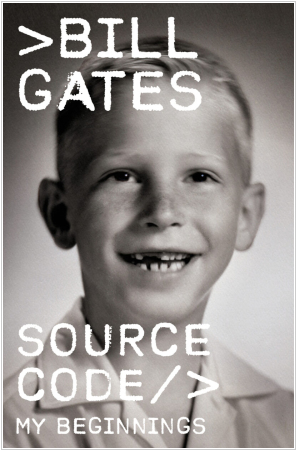
This is the autobiography of the man who invented modern operating systems. The book covers his early life and the founding of Microsoft, culminating in the late 1970s when Microsoft signed its first deal with Apple. It is the first of three planned memoirs by Gates. In the book, he recounts some of the most difficult moments of his youth, including feeling like a failure as a child, fighting with his parents as a rebellious teenager, dealing with the sudden loss of a loved one and nearly being kicked out of college, as well as his decision to drop out of Harvard University and co-found Microsoft with Paul Allen. The book is written with a lot of self-deprecation and modesty. This is not Bill Gates’s first book. In 1995, he wrote "The Road Ahead", which outlined his views on where society is headed as information technology advances. And in 1999, Gates wrote a book called “Business at the Speed of Thought,” dedicated to how information technology can solve business problems in a completely new way. So Bill is aiming to be a real writer and without a doubt, the next parts of his autobiography will be even more interesting.
See also: Top 10 eBook Organizers