1. Wind Energy Explained: Theory, Design and Application

This book is based on a course Wind Energy Engineering that has been taught at the University of Massachusetts since the mid-1970s. It describes the basics of wind energy, in particular the design and operation of a wind turbine. Industrial wind turbines today typically range in power from 1.5 to 5 MW. For example, they are manufactured by General Electric (at the time of writing, the company has produced more than 10,000 such units). Today, the most common type of wind turbine is a horizontal-axis wind turbine (HAWT). The main components of such turbine are the rotor, consisting of the blades and hub, the drive train (shaft, gearbox, clutch, mechanical brake, generator), the nacelle and mainframe (turbine casing, baseplate, attitude control system), the tower and foundation, the machine control systems and the balance of the electrical plant (cables, switchgear, transformers and possibly electronic power converters). The conversion process uses the aerodynamic force to create a positive torque on the rotating shaft. The mechanical energy of the shaft is then converted into electricity in a generator. Wind turbines, unlike most generators, can only produce energy in response to the resource that is available at the time (it is not possible to store wind and use it later). So the turbine output is an inherently variable and non-dispatching. Any system to which a wind turbine is connected must take this variability into account. In large grids, a wind turbine reduces the overall load on the system, resulting in either fewer conventional generators running or lower fuel consumption. In smaller grids, energy storage, backup generators or specialized control systems may be required.
2. Wind Power For Dummies
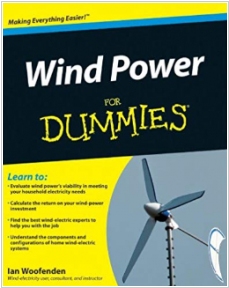
This book is intended for readers who want to install a wind turbine at their private home. The author believes that you need to start by understanding your motivation, because the whole project depends on it. For example, it could be to reduce your environmental impact, saving money, improving the reliability of your home's electricity supply, strengthening your social status or jyst a new hobby. If wind energy is a hobby, you will be less concerned with the payback; if it is an environmental passion, it is important to make sure that you are actually cleaning the Earth and not cluttering it with new "junk". If you really want to create an effective energy source, you must first make sure that you have enough wind. You need a good place to install the tower and even with a good location and wind, you need to have the skills to design, install and maintain the system. It is also important to determine the size of the generator, the air density and the installation height in advance. They can be calculated based on wind speed and the target value of the received power and for this you need to understand how much energy you consume. An energy audit will help you to make a list of the main "consumers": air conditioning, heating, lighting. How to determine the average wind speed? Watching the wind is not enough. You need the most accurate measurement. Wind is your "fuel" and without assessing its quantity, you cannot calculate the possible output.
3. Superpower: One Man's Quest to Transform American Energy
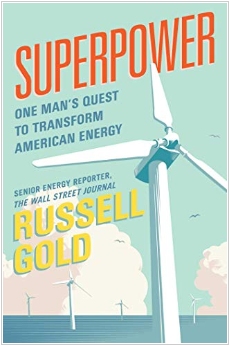
This book by Wall Street Journal Energy reporter and Pulitzer Prize finalist Russell Gold tells the story of Michael Skelly, an entrepreneur and developer of transmission and renewable energy infrastructure in Houston, Texas. Working for Energia Global since 1996, he developed small energy projects in Central America, including Tierras Morenas - the largest wind farm in Costa Rica and (at the time) one of the largest in Latin America. From 1999 to 2008, he served as chief development officer of Horizon Wind Energy, which by 2007 had become the second-largest wind farm developer and the third-largest owner of wind farms in the United States. In 2009, Skelly co-founded and became president of Clean Line Energy, an independent developer of long-distance high-voltage direct current (HVDC) transmission lines. The book details how Clean Line encountered numerous bureaucratic hurdles in developing its HVDC transmission lines. After ten years of development, Skelly sold the Clean Line projects to other energy developers. Now he is CEO of Grid United, an independent interregional transmission development company he founded in 2021.
See also: Top 10 eBook Organizers