Java was created by one guy - James Gosling in 1995. At that time, the concept of object-oriented programming (OOP), which conveniently divides programs into classes, was becoming popular. James's idea was like this: What if we make absolutely ALL program components - Classes? No functions, no operators, no main script. Just classes. Then programs would become much simpler, because all the "building blocks" would be unified.
However, he immediately had to divide Classes into Classes and Interfaces - so that they could be sent to methods of other classes without having to write the same code twice. And since interfaces were already added, he decided to unify common operators that previously just worked. For example, how do you sort a list of class objects now? The list is a class and sort - is a method. So to send a class in a method of another class, you need to create an interface. Okay, let's create an interface Comparable. And so on...
But then simple languages like Python and JavaScript appeared with scripts, operators and functions and began rapidly stealing Java's popularity. Then Sun (which was developing the language at that time) decided that Java needed functions, because in some cases, creating a class for a simple task is like hammering nails with a microscope.
But easier said than done. The very core of the Java language was designed for the "Classes Only" concept. Reworking it would have meant breaking the virtual machine, breaking all existing enterprise systems written in Java. So they came up with a workaround: Functional Interfaces (interfaces with a single method, written as a lambda function, which is actually an anonymous class). They work like functions, but with a syntax that can drive you crazy. Furthermore, they created functional interface templates and gave with names, which are often not so intuitive (like Supplier and Consumer).
Thus, the attempt to make everything simple and unified led to increased complexity. However, through unification, Java retained its reliability, which is why it remains the most widely used language for building large enterprise systems.
Here are some books on Java Philosophy:
Java for Artists: The Art, Philosophy and Science of Object-oriented Programming
2006 by Rick Miller, Raffi Kasparian
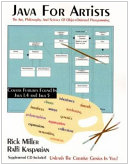
Download PDF
Object-Oriented Programming and Java
2007 by Danny Poo, Derek Kiong, Swarnalatha Ashok
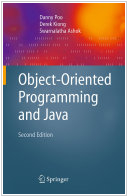
Download PDF
Theoretical Introduction to Programming
2005 by Bruce Ian Mills
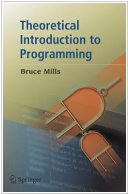
Download PDF
See also: Top 10 eBook Organizers
How to download PDF:
1. Install Gooreader
2. Enter Book ID to the search box and press Enter
3. Click "Download Book" icon and select PDF*
* - note that for yellow books only preview pages are downloaded