1. Mind Mapping: Improve Memory, Concentration, Communication, Organization, Creativity and Time Management

This is a book for business leaders and professionals that explains how to use mind maps to think better, learn faster and remember more. I liked the idea of comparing a mind map to how the brain works: every new thought that the brain forms or perceives must be connected to other (already existing) thoughts. Each thought has hundreds or thousands of back-connections. For example, imagine you open your window early in the morning and smell freshly cut grass. Suddenly you are transported back to your childhood, when you were ten years old. Your brother is mowing the lawn and your mother put a bouquet of freshly picked lilacs in a vase and you sneeze from the strong smell. This is how brain is building a tree of associations. So, mind maps have a similar structure. They start with some theme or idea in the center and then grow associative branches from it. Each new piece of information is always connected to another. So, the conclusion is that maybe building a mind map is the most natural way of thinking.
2. Mind Map Mastery
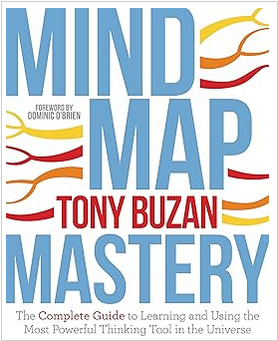
The author of this guide to using mind maps argues that the beauty of this thinking tool is in its simplicity. On paper (or on a screen), it is a colourful visual diagram used to fix your thoughts. However, it activates ‘holistic’ thinking (engaging both the logical left side of the brain and the creative right side). The idea that the brain has two distinct ways of thinking was first popularised by American artist Betty Edwards in her groundbreaking book "Drawing with the Right Side of the Brain". The book was based on the Nobel Prize-winning work of Dr Roger W. Sperry and revolutionised drawing education. She supposed that the brain has two ways of perceiving and processing reality: the left side of the brain is verbal and analytical, while the right side is visual and creative. Her teaching methods were aimed at bypassing the ‘censorship’ of the left side of the brain and unlocking the expressiveness of the right side. So the book explains how to apply this technique to building mind maps.
3. How To Start Mind Mapping: Your Comprehensive Guide To Boost Your Memory
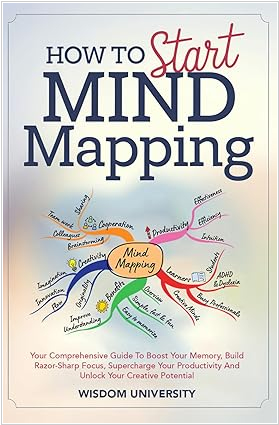
What I liked about this guide to mind mapping is how the author explains the reason why this thinking technique is so effective. He says it’s the same reason of why children love picture books. Their colorful images set the tone for the words on the page, helping them make sense. Children learn primarily from what they see, which is no surprise since vision is considered our most important and complex sense — biologically, socially and culturally. Most people are primarily visual learners. Who of us didn’t prefer the illustrated version of a novel or an atlas with glossy photos in high school? Much of what we learn is stored in our mind as images. But often, we must express our thoughts in words — either verbally or in writing. Those who hear or read our words form their own mental images in their minds. Often these images (due to poor word choice or lack of clarity) cause a problem for the sender. The same with mind maps. It is a picture that integrates our words into something that makes sense, even if the words are not chosen quite correctly - their connections with other blocks of information correct the overall picture.
See also: Top 10 eBook Organizers