1. Swarm Troopers: How small drones will conquer the world

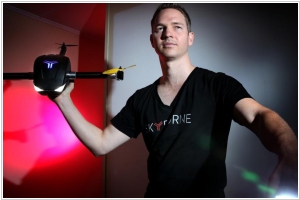
This book begins with the symbolic Farnborough International Airshow 2014, where the F-35 Lightning II fighter jet from Lockheed Martin was supposed to be presented. But it was not finished in time and the show was stolen by Micro Drone 2.0 - a toy quadcopter the size of a palm with camera and price $85 each. This book explores what a swarm of thousands of such small drones (which cost a small part of an F-35) are capable to do. Modified Micro Drone could perform combat missions - conduct reconnaissance of enemy positions or carry a warhead. The author says that drones have emerged from consumer electronics, which today develops significantly faster than military tech (although in the past it was the other way around). In the time it takes Lockheed Martin to complete one jet, ten generations of military drones could be released. At Farnborough 2014 some military drones were also presented. One of them is the AV Sparrow - slightly larger, stronger and more expensive than the Micro Drone. Others: Puma, Scan Eagle and Shadow resembled light aircrafts. The largest were the Predator and Reaper - armed drones the size of manned aircraft, used for reconnaissance and strikes in Afghanistan. The book describes them also.
2. Army of None: Autonomous Weapons and the Future of War
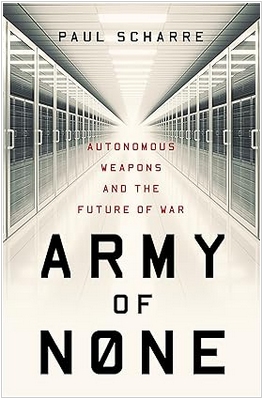
The author of the book tells how he traveled to Camp Roberts and watched as researchers from the Naval Postgraduate School tested a swarm of drones. Unlike the Predator drones, which are individually remotely piloted by human controllers on the ground, these drones are controlled by autopilot. Without any human control, they rise to a set altitude and form into team. The behavior of the swarm is controlled by a simple algorithm called "Greedy Shooter." An operator only needs to select the swarm behavior and command to begin. The author says that robots have many advantages on the battlefield compared to traditional human-controlled vehicles. Freed from human physiological limitations, unmanned drones can be smaller, lighter, faster and more maneuverable. They can remain on the battlefield far beyond human capabilities, for weeks, months or even years without rest. They can take greater risks, opening tactical opportunities for dangerous or even suicidal missions without risking human lives.
3. Poor Man's Air Force: A guide to how small drones might be used in domestic unrest or low intensity conflicts
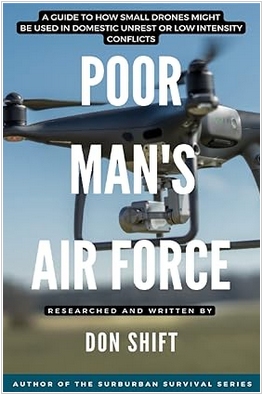
Don Shift, author of Poor Man's Air Force, in his previous book (Suburban Warfare, 2021) discussed how small drones could be weaponized for military purposes. In 2022, after the Russian invasion to Ukraine, this became a reality and we saw how small drones quickly became "nightmare weapons". What is happening in Ukraine with drones is a transformation of warfare and the integration of small unmanned aerial vehicles in military operations is already beyond the initial stages. This book explores how small military units can use drones against adversaries. The main advantage of UAVs is the ability to serve as "poor man's aviation". For most countries, airplanes and helicopters are unaffordable luxuries, but a consumer-grade drone can be a significant force multiplier. The advantages a cheap drone provides can make all the difference in a defensive situation or conflict. There are many types of sUAS, including large fixed-wing remotely controlled aircraft. This book focuses on consumer drones, which are basically quadcopters. These are the cheapest, most common and easiest to control machines which are sold and used in large numbers.
See also: Top 10 eBook Organizers