1. Alex Ferguson: My Autobiography

This is Alex Ferguson's second book, after "Managing My Life", which he wrote while still an active manager. This book is not only an autobiography, but also an explanation of why he retired. Although his retirement came as a surprise to the industry, this autobiography shows that it was a logical and inevitable next step. This book does not retell the contents of "Managing My Life", so Ferguson only briefly covers his childhood in Glasgow, life in Aberdeen and focuses on his years in Manchester. For example, it is interesting that Ferguson considers his defining moment at United - the FA Cup third round win over Nottingham Forest in January 1990, when his job was literally hanging by a thread (months without a single win). Many fans have no idea how close he was to being fired. Winning the FA Cup in 1990 gave the club a break and reinforced the feeling that this was a truly great club, built to win. Winning the FA Cup at Wembley was a return to the good times. But the morning after the win, one newspaper wrote: “Well done, you’ve proved you can win the FA Cup. Now go back to Scotland.” The book also reveals some of the secrets of the manager’s work that Ferguson didn't want to share while he was in the game. For example, in his early years at MU, he quickly realized that to earn the trust and loyalty of his players, he had to give it all to them first. He relied on observation and applied this skill by assessing players’ habits, moods and patterns. He says: Some people walk into a room and don’t notice anything. Use your eyes - it’s all on the surface.
2. Rio Ferdinand: Thinking Out Loud
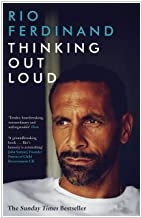
Rio Ferdinand, one of the best defenders in the history of Manchester United, says that he would never have written this book. He became a professional footballer at the age of 15 (when he signed his first contract with West Ham) and although many years have passed since then (Rio is 38 at the time of writing) and he has changed a lot - one thing has remained the same: he has always been a fanatically private person. All he wanted was to become a world-class footballer and be respected for his play. But he never wanted attention off the field: photo sessions or parties - that was not about him. In addition, Rio learned from childhood to control his thoughts and emotions. And in the Premier League dressing room there is no place for pity: anyone who shows vulnerability will be punished. So Rio could not even imagine that one day he would pour out all his experiences and private thoughts on paper. But everything changed on May 1, 2015, when his wife Rebecca died of cancer. Rio, who was used to always winning, found himself absolutely helpless. He needed to help his children get through this tragedy, but he didn't know how. A chance helped: he was offered to make a documentary for the BBC about athletes who had lost their wives. When the film was shown, the reaction shocked Rio. More than eight million people watched it and every day, people came up to him and said how much this story touched them. But most importantly, the film helped establish emotional contact with the children and this book became a logical continuation. So basically, this book is the story of Rio's life with Rebecca, but of course, MU fans will find in it a lot of interesting memoirs about the history of the club.
3. Michael Carrick: Between the Lines: My Autobiography
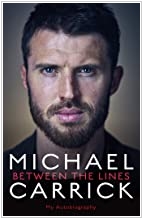
Unlike Rio Ferdinand, Michael Carrick loved being a part of Manchester United party. Gary Neville in the programme in 2017 when said: ‘People might not know it, but Michael’s totally bought into it. He’s always there, whenever we win things and we have a party, he’s always there, the loudest having a sing-song and he’s always the last to leave. He enjoys it the most.’ But it's hard to believe that football might never have been an option for Carrick. As a kid he could have ended up in a wheelchair. His knees knocked together and he had flat feet. Doctors in Wallsend feared that when he started growing he wouldn’t be able to walk or run properly and advised to operate. Poor Mam and Dad sat in the surgeon’s office confronted with this massive decision – operate or stick with how little Michael was and hope he wouldn’t restricted when he grew? Once the surgeon talked about a 50/50 chance of success or ending up in a wheelchair, the parents said, ‘No chance, it’s not worth the risk.’ and marched Michael out the clinic. As he grew, his knees still went in a little and he still had dropped arches, but he ran without any trouble. And since his dad took him to watch football at Wallsend Boys Club, he always had a ball at his feet or carried one around. Being knock-kneed gave Carrick some issues over the years, bad Achilles and the like, but never stopped him playing. Football has always been my life. When I was a toddler I Even when I was taken to a toy shop, I’d come back with some kind of ball.
See also: Top 10 eBook Organizers