2025.
Top 3 Software for Church Libraries
Сhurch library is a place where books and other materials related to religion, church history and spiritual literature are stored. These can be small collections of books in parish churches or large libraries at monasteries or theological academies. Although the church does not particularly strive for technical progress and the study of new technologies, but still, using software to manage the church library is a good idea for church ministers, because it allows to save time and ensure the safety of books, organize them better and help parishioners (and other church ministers) find what they are interested in.
***2022.
FOLIO 14 brings electronic resource management
The open source community FOLIO has released a new version of its library management system,
FOLIO 14. This update aims to improve the librarian's experience with the FOLIO platform by introducing improved user interface for cataloging, data import and book distribution via the Calendar module. Enhancements to the acquisition system include the ability to preview fiscal year rollovers, create new invoices from order records, manage GOBI integration via a dedicated user interface and download/resubmit EDIFACT order export files using the Export Manager module. ERM includes improved dashboard management and sharing capabilities, improved keyword searching for agreements, expanded search and filtering capabilities by agreement strings, display of alternative titles and the ability to export package and title information via the eholdings module. Additionally, bulk editing capabilities have been expanded to allow editing user records, FOLIO locations and loan types across the platform.
2021.
Federal Government Library selects Bibliovation
A federal government library in Massachusetts has selected
Bibliovation as its new library services platform. The library has already begun the implementation process and plans to fully launch Bibliovation by the end of October. Bibliovation provides the necessary technical capabilities to meet the library's workflow needs, while LibLime's offering fits within budget constraints. LibLime will also provide implementation and support services. The Bibliovation LSP is entirely web-based, allowing researchers, library staff and system administrators access it via common web browser. Using FedRAMP-authorized IaaS and PaaS certifications, delivered by the Amazon AWS cloud, Bibliovation also offers libraries a secure and cost-effective hosting solution.
2021.
Koha improves Accounting and Transfers moduls Koha
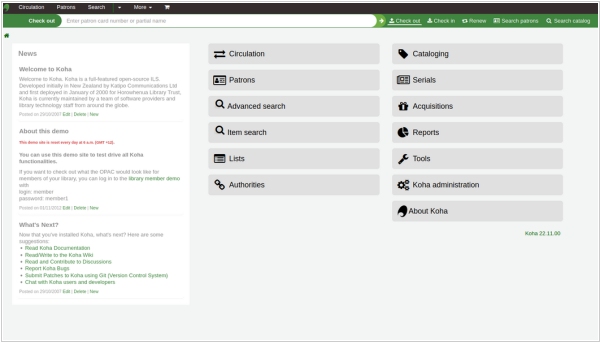
Koha has released a major update of its Library Automation software that will benefit private, commercial and public libraries. This update focused on improving the accounting functions, first of all, Point of Sale and Cash Management. In particular the new features were added for cash payment accounting and audit process. Additionally, efforts were made to ensure that all actions related to invoices comply with proper double-entry methods, thereby establishing a link between revenue and liabilities. A significant amount of work was devoted to refactoring the transfer system. Specifically, transfers can now be queued and a priority system has been implemented for various transfer-initiating mechanisms.
2014.
Bibliovation adds new Discovery Layer
LibLime has released a new version of its Public Library software
Bibliovation 5.6. The core of the update is a new Discovery Layer built on a RESTful API. It expands local customization options and enables seamless integration with third-party products and resources used in modern academic libraries. The release also includes key enhancements such as the ability to merge authority records, an OPAC editor and mobile support. As with previous versions, the entire Bibliovation application runs on the Plack framework, providing improved performance. Additionally, Bibliovation leverages the Solr search engine - popular open-source enterprise search platform built on the Apache Lucene project. Solr is exceptionally scalable, facilitating distributed search and index replication.