2025.
Libero 6 Event Management for libraries allows to bring communities together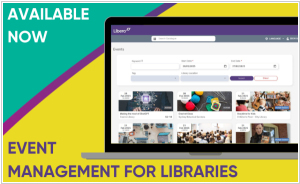
The
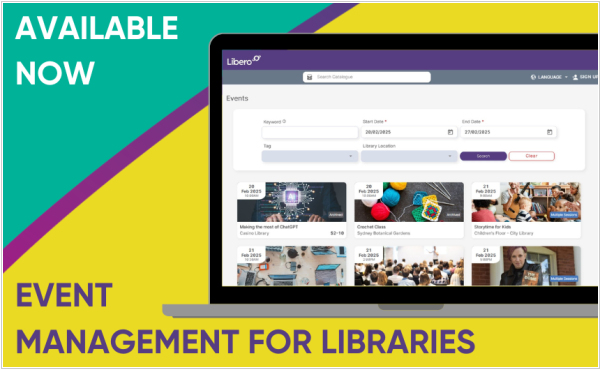
Libero 6 Congo release introduces a number of exciting new features that elevate modern library operations and member experiences even more. The new Event Management for Libraries in Libero 6 brings communities together in a way that is intuitive and easy-to-use. With Event Management for libraries in Libero 6, libraries can create, promote and manage events for their communities all in one, easy location within the LMS. Event Management with Libero 6 saves staff time, encourages new memberships and lets your existing members access events when and where it suits them. You can create single or recurring events including an image, description, session availability, location map, address, tags and contact details of organisers who can be library staff, library members or external organisers.
2024.
Libero Library Management System adds 2-Factor Authentication 
In a galaxy not too far away—specifically the one with oddly comforting keyboards—Knosys has unfurled the next chapter of its flagship odyssey,
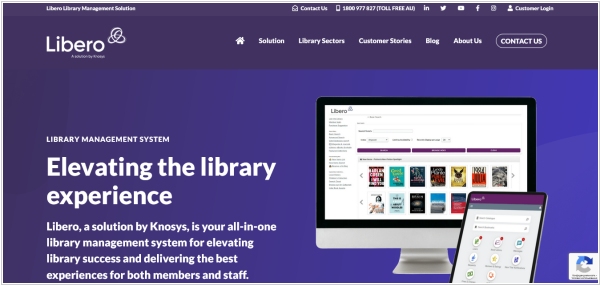
Libero, version 6, a marvel of technological tinkering designed to make your digital library experience as smooth as a Vogon poet's rendition of iambic pentameter is not. Among its splendid bells and whistles, it offers Two-Factor Authentication (2FA) for the Libero 6 Dashboard login, which is essentially a friendly bouncer asking for Email, SMS, or TOTP passwords to prove you're not a mildly intelligent shade of blue. Librarians will rejoice (possibly with a cup of something frothy) over its souped-up bibliographic data management, boasting record-merging wizardry and the ability to wrestle MAB into MARC conversions like a pro. Meanwhile, in the WebOPAC corner of the cosmos, search and registration are now so intuitive they might just know what you want before you do, and the Member Portal has been given a sorting and visual makeover that feels like zipping through hyperspace—only without the pesky time dilation.
2023.
Libib adds Patron freeze to prevent self-checkouts/holds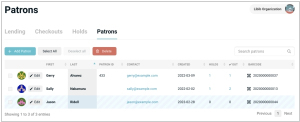
Сloud-based library management service
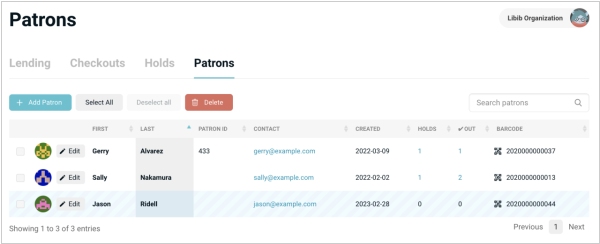
Libib has introduced a new feature called "Visitor Freeze". Previously, Libib Pro accounts allowed users to self-checkout e-books through a online platform or kiosk. However, there was no restriction to prevent users from exceeding their limits on placing self-checkouts. The only way to resolve this was to completely delete the user, that would also delete their visiting history and current checkouts/holds. So Libib now offers library managers the ability to freeze a user's account. If a library administrator chooses to freeze a user, that user will no longer be able to self-checkout books or place book holds. Instead, when attempting to checkout an item, they will receive a notification that their account is currently frozen.
2022.
Koha enables two-factor authentication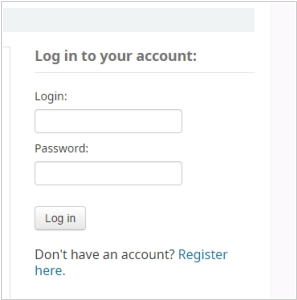
The latest incarnation of the ILS system,
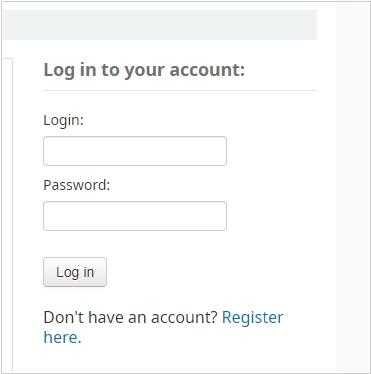
Koha 22.05, saunters onto the stage with an optional dabble in two-factor authentication (2FA)—because, let’s face it, passwords alone are about as secure as hiding your library key under the doormat. This avant-garde security flourish involves time-based, one-time passwords (TOTP), which sound impressive and, to be fair, rather are. Librarians are invited to partake in the ritual by downloading an authenticator app—Google Authenticator, andOTP, or any suitably clever app that won’t lose your codes in a cosmic accident. With a quick detour to More > Manage Two-Factor Authentication, you can unlock the mysteries of 2FA by: 1) Pointing your phone at a QR code with all the earnest intent of someone trying to capture a rare Pokémon, and 2) typing in the cryptic one-time code that materializes. Thereafter, each login becomes an adventure as the system politely demands the magic authenticator code in addition to your usual credentials. Pro tip: Opt for apps with backup features—because when the universe sneezes, you’ll want your 2FA accounts firmly tethered in the cloud or somewhere equally non-ephemeral.
2022.
Libero to offer libraries more security
In the ineffably vast and bewildering universe of library management systems,
Libero has introduced a dazzling array of updates so practical, even a Vogon bureaucrat might consider them handy. Among these enhancements are rather clever bits like optional default passwords—wherein librarians can set a member’s surname or phone number as the initial access point, sparing members the agony of a mysterious first-time login. And if that's not enough to feel positively splendid, they've also implemented improved security measures, like nudging members with politely insistent emails reminding them of renewal details all bundled in one place (far easier than searching the length and breadth of the Milky Way for such trivialities). There's even the endearing ability to store and respect preferred names for members, all while preserving the gravitas of official records. Best of all, password change requirements on the first WebOPAC login ensure a boost in security without a hint of Vogon poetry, so users can safely roam the electronic stacks, enjoying an experience that's a tad more inclusive, a smidgen more secure, and possibly a lot more delightful.
2021.
Evergreen adds acquisitions administration, holdings maintenance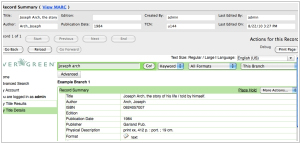
The release of
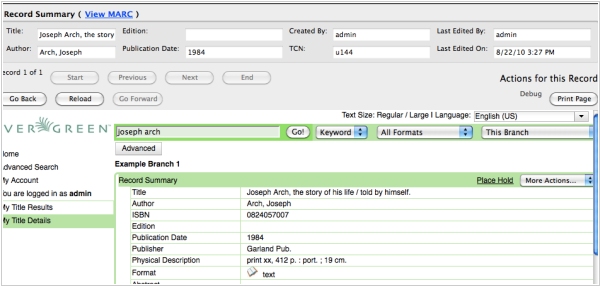
Evergreen 3.8 is announced by The Evergreen Community. Evergreen is a highly-scalable software designed for libraries to facilitate the discovery of library materials by patrons and assist in managing, cataloging and circulating those materials, regardless of the library's size or complexity. This release brings numerous new features and enhancements, such as Angular rewrites of several staff interfaces including acquisitions administration, holdings maintenance, item attributes editor, patron triggered events log and item triggered events log. Additionally, it introduces a case-insensitive option for browsing headings, a new interface for editing notes attached to bibliographic records, improvements to the staff interface for browsing bib records attached to a heading and consolidation of patron notes, messages, alert messages and standing penalties into a unified notes interface. Other additions include settings for determining item value based on item price and acquisition cost, enhancements to override event dialogs in checkout and renewal interfaces, the ability to edit the patron photo URL during registration, settings for hold stalling based on pickup library, settings for default pickup location for staff-placed hold requests, utilization of a newer Stripe API for credit payments in the public catalog, display of cover images in My Account pages for items checked out, check out history, holds and holds history and new reporting views such as item statistics and Dewey call number blocks and ranges.0352
2014.
Bibliovation adds new Discovery Layer
LibLime has released a new version of its Public Library software
Bibliovation 5.6. The core of the update is a new Discovery Layer built on a RESTful API. It expands local customization options and enables seamless integration with third-party products and resources used in modern academic libraries. The release also includes key enhancements such as the ability to merge authority records, an OPAC editor and mobile support. As with previous versions, the entire Bibliovation application runs on the Plack framework, providing improved performance. Additionally, Bibliovation leverages the Solr search engine - popular open-source enterprise search platform built on the Apache Lucene project. Solr is exceptionally scalable, facilitating distributed search and index replication.