Bibliovation vs Koha
January 08, 2026 | Author: Maria Lin
23

100% web- and cloud-based library services platform (LSP) with fully integrated digital collection management capabilities. Developer LibLime hosts the system in the Amazon EC2 cloud. The platform is highly customizable to support various library workflows. Users can select individual system components (e.g., acquisitions, MARC21 cataloging editor, search layer, digital content management module, etc.). The digital content management module provides a digital document repository that enables processing scanned and native digital documents, making your electronic resources and digital collections accessible online, including from mobile devices.
27

Free, open-source, web-based integrated library system used today by hundreds of libraries worldwide. Koha offers easy-to-use lending policies, efficient patron management, intuitive navigation and advanced access rights for staff accounts, as well as extensive support for reservations, OPAC search, staff managemnt and administrative functions. Koha's acquisitions module allows the library to record orders placed with suppliers and manage purchasing budgets. It is server software running on a GNU/Linux operating system such as Debian or Ubuntu. It is not a desktop application and does not run natively on Windows or macOS.
Bibliovation vs Koha in our news:
2023. Bibliovation 7.2 gets online payment options
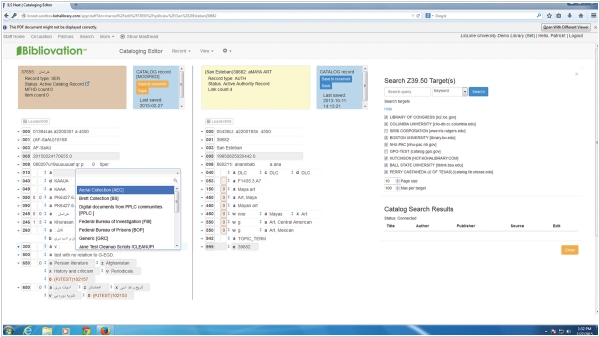
LibLime introduces the latest version of its ILS software Bibliovation 7.2. It is entirely web-based, granting researchers, library staff and system administrators access through web browsers. By leveraging the FedRAMP authorized IaaS and PaaS certification from Amazon AWS Cloud, along with a special security authorization from the US Department of Defense's cybersecurity experts for SaaS, Bibliovation provides libraries with a highly secure and cost-effective hosting solution. It supports various standards such as MARC21, Dublin Core, RDA and geotagging, enabling libraries to manage both physical and digital content on a single Rest API-based platform. The Bibliovation circulation subsystem is purpose-built to facilitate shared union catalog solutions, granting individual consortium members significant autonomy, including ownership of local bibliographic records, item records and patron records. Bibliovation MARC cataloging allows for local control over cataloging rules that can complement or surpass AACR2 and RDA rulesets. The acquisitions subsystem in Bibliovation is EDI-compliant, featuring a multi-tiered fund hierarchy and supporting the import of csv data converted into the MARC21 format for streamlined acquisition workflows. Additionally, Bibliovation now includes online payment options and comprehensive NCIP support. With hosted production, reporting and test systems, libraries have the necessary capabilities and control to effectively support their daily operations.
2021. Federal Government Library selects Bibliovation

A federal government library in Massachusetts has selected Bibliovation as its new library services platform. The library has already begun the implementation process and plans to fully launch Bibliovation by the end of October. Bibliovation provides the necessary technical capabilities to meet the library's workflow needs, while LibLime's offering fits within budget constraints. LibLime will also provide implementation and support services. The Bibliovation LSP is entirely web-based, allowing researchers, library staff and system administrators access it via common web browser. Using FedRAMP-authorized IaaS and PaaS certifications, delivered by the Amazon AWS cloud, Bibliovation also offers libraries a secure and cost-effective hosting solution.
2014. Bibliovation adds new Discovery Layer
LibLime has released a new version of its Public Library software Bibliovation 5.6. The core of the update is a new Discovery Layer built on a RESTful API. It expands local customization options and enables seamless integration with third-party products and resources used in modern academic libraries. The release also includes key enhancements such as the ability to merge authority records, an OPAC editor and mobile support. As with previous versions, the entire Bibliovation application runs on the Plack framework, providing improved performance. Additionally, Bibliovation leverages the Solr search engine - popular open-source enterprise search platform built on the Apache Lucene project. Solr is exceptionally scalable, facilitating distributed search and index replication.